How pro teams handle hazardous finds safely during clearances
Hazardous finds during a clearance can turn an ordinary job into a careful, methodical operation in a matter of seconds. A cracked bottle of solvent in a garage, a leaking fridge at the back of a shop, a hidden box of sharps in a loft, or something that simply smells wrong after a few minutes in the room - these are the moments where experience really matters. How pro teams handle hazardous finds safely during clearances is not about being dramatic; it is about slowing things down, isolating the risk, and using a process that protects people, property, and the wider environment.
This guide explains what professional clearance teams do, why their approach matters, and what good practice looks like in the real world. If you are arranging a house clearance, office clearance, or bulky waste removal, it also helps you understand what to expect before anyone starts lifting, sorting, or loading. And, to be fair, that reassurance counts for a lot when you are already dealing with a stressful property.
Table of Contents
- Why this matters
- How the process works
- Key benefits and practical advantages
- Who this is for and when it makes sense
- Step-by-step guidance
- Expert tips for better results
- Common mistakes to avoid
- Tools, resources and recommendations
- Law, compliance, standards, or best practice
- Options, methods, or comparison table
- Case study or real-world example
- Practical checklist
- Conclusion
- Frequently asked questions
Why How pro teams handle hazardous finds safely during clearances Matters
Hazardous items are not always obvious. In many clearances, the risky find is not a big warning sign with flashing lights. It might be a dusty aerosol tin behind a cabinet, a tube of old paint stripper in a utility room, a damaged fluorescent light, a rusty blade tucked inside a drawer, or unknown chemicals stored alongside ordinary household clutter. Once disturbed, these items can create fire risk, cuts, contamination, fumes, or exposure to unknown substances.
Professional teams treat that possibility seriously because clearance work is often done in cramped, awkward, and unpredictable spaces. One person is trying to sort salvageable items, another is moving waste, and someone else may be navigating stairs, tight hallways, or a loft with poor lighting. If a hazardous find is ignored, it can affect the entire job. A careless moment can also put neighbours, passers-by, or waste handlers at risk later on.
The other reason this matters is trust. Anyone can say they do clearance work. Not everyone knows what to do when a suspicious container, clinical waste, or potentially flammable item turns up. Good teams have a habit of pausing first and acting second. That sounds simple. It is simple. But it saves people from the kind of mistake that only becomes obvious after the damage is done.
There is also a legal and environmental angle. Waste must be handled in a way that avoids harm and contamination, and some items need specialist routing rather than ordinary mixed waste collection. In practice, that means sorting properly, using the right containers, and knowing when a site needs a more cautious approach than a standard furniture clearance. If you are comparing options, services like waste clearance and rubbish removal are often part of the bigger picture, but hazardous finds always deserve extra attention.
How How pro teams handle hazardous finds safely during clearances Works
In a professional clearance, handling hazardous finds safely is really a chain of decisions. It starts before the team touches anything. Most good crews begin with a quick visual assessment on arrival, noting obvious risks such as damaged items, smells, spills, sharp objects, medical waste, old electricals, or containers without labels. They are not trying to diagnose everything on the spot. They are simply identifying what needs caution.
From there, the process usually follows a predictable pattern:
- Stop and isolate the area around the item.
- Do not open, shake, or repackage anything uncertain unless the team is trained and the item is suitable to handle.
- Separate the risk from general waste so it is not mixed accidentally.
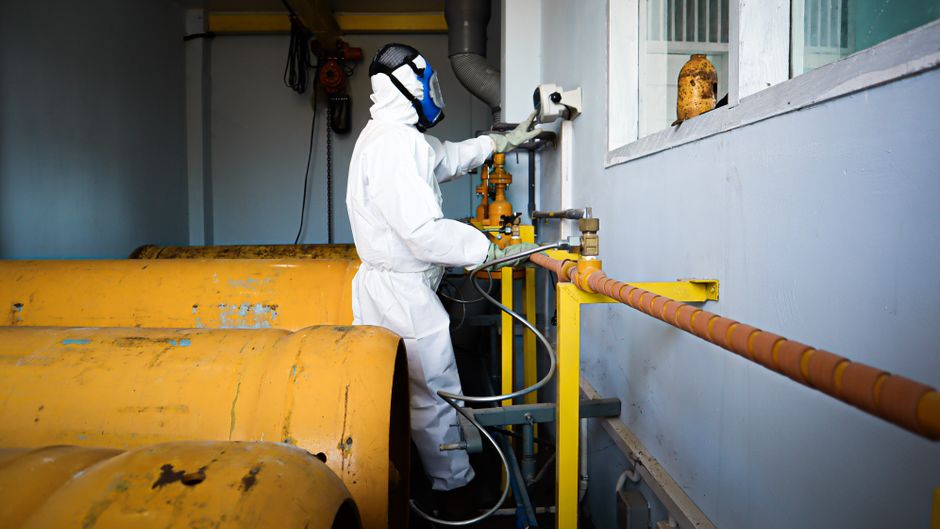
- Use appropriate PPE such as gloves, eye protection, masks, or heavier-duty clothing where needed.
- Decide the route for safe removal, storage, transport, or escalation to a specialist stream.
- Document the find if the job requires traceability, especially in business or end-of-tenancy settings.
That sounds formal, but on site it is often a quiet, practical rhythm. One person keeps the area clear while another checks the item from a safe distance. If it is a suspected chemical, they will look for labels, leaks, corrosion, or signs of heat exposure. If it is sharp or contaminated, they will use the right container rather than improvising with a bin liner and a hopeful expression. Not ideal, that last one.
The key point is that professional teams do not treat every hazardous find the same way. A broken mirror is a cut risk. A frayed cable is an electrical risk. An old tin of solvent is a ventilation and fire risk. A clinical item is a contamination risk. The hazard decides the response, not the other way around.
Key Benefits and Practical Advantages
Using a trained team to deal with hazardous finds has benefits beyond the obvious safety angle. It reduces disruption, keeps the job moving, and lowers the odds of a small issue turning into a major one.
- Safer for everyone on site. Staff, occupants, neighbours, and building managers are all better protected when risk is identified early.
- Less chance of contamination. Hazardous items are less likely to leak into mixed waste or damage reusable materials.
- Better decision-making. Professionals can tell the difference between a nuisance item and a genuine hazard that needs specialist handling.
- Cleaner outcomes. Clearance results are usually neater when risky materials are separated rather than bundled together at the end.
- Lower liability pressure. Good process helps businesses and landlords show they acted responsibly.
- Fewer delays later. It is far easier to pause for ten minutes than to fix a contaminated load or reschedule a collection.
There is a quieter advantage too: peace of mind. If you have ever cleared a relative's house, a cluttered flat, or a back office after a long shutdown, you will know how much emotional energy that uses up. Having professionals who can calmly say, "Right, we'll set this aside safely," is worth a lot. It turns a messy situation into a manageable one.
Expert summary: The safest clearance teams do not rely on guesswork. They identify, isolate, separate, and escalate when needed. That simple discipline is what protects people and keeps the rest of the job under control.
Who This Is For and When It Makes Sense
This approach makes sense for anyone dealing with a property where the contents are unknown, mixed, or potentially risky. It is especially relevant if you are managing a house clearance after a long tenancy, a probate property, a garage full of old storage, or a commercial site where waste has built up over time.
Typical situations include:
- House and flat clearances where old cleaning products, tools, batteries, or glass may be hidden in cupboards and lofts.
- Garage clearances with DIY materials, fuel cans, paint tins, and sharp offcuts.
- Office clearances involving cables, damaged electricals, toner, batteries, or confidential waste that needs careful handling.
- Garden and shed clearances where fertilisers, pesticides, fuel, and broken garden equipment may be mixed in.
- Bulky waste jobs where an item that looks harmless at first turns out to be damaged, leaking, or contaminated.
If the site contains large furniture too, that does not stop a clearance from being done safely. It just means the team needs to keep hazardous finds separate from the usual load. Services like house clearance, office clearance, and garage clearance are often chosen precisely because they can deal with mixed contents without making the customer sort everything first.
For some people, the biggest issue is timing. You might need a room cleared before surveyors arrive, or you may be between tenants and discovering things only when the furniture starts moving. That is where experience matters most. A professional team can keep the clearance on schedule while adjusting the method if something unsafe appears.
Step-by-Step Guidance
If you want a clear picture of how a good team works, here is the typical flow from start to finish. The exact steps vary by site, but the logic stays the same.
1. Start with a cautious assessment
The team inspects the area before lifting begins. They look for warning signs such as smell, staining, bulging containers, damaged packaging, broken glass, insect activity, or unknown liquids. If something looks off, they do not rush it. A few seconds of caution can save a lot of grief.
2. Create a safe perimeter
Once a suspicious item is found, the surrounding area is kept clear. That may mean stopping the team from using the room, asking occupants to step back, or blocking access until the next decision is made. In a tight hallway, even moving one heavy item the wrong way can spread dust or knock into something else.
3. Identify the hazard type where possible
Professional teams try to recognise common categories: chemicals, sharps, medical waste, electrical items, batteries, broken glass, pressurised containers, or potentially contaminated materials. The aim is not to overcomplicate it. It is to sort the item into the right response path.
4. Use the correct handling method
Some items can be moved carefully into a designated container. Others should remain untouched until a specialist route is agreed. In many clearances, the safest decision is to leave a risky item where it is, isolate it, and deal with the rest of the property first. That is not delay for delay's sake. It is sensible sequencing.
5. Separate from general waste
Hazardous finds must not be mixed with ordinary waste, furniture, or recyclable materials unless the item is specifically suitable for that route. This is a common mistake in rushed clearances. A single contaminated bag can affect a whole load. Annoying, but avoidable.
6. Load and transport carefully
Once the item is secure, it is loaded in a way that reduces movement, crushing, or spillage during transport. Teams think about weight distribution, access, and whether the item needs to stay upright. A leaking container on the back of a vehicle is the kind of problem nobody wants by 4 p.m. on a wet London afternoon.
7. Record and route the waste correctly
Professional operations usually keep some form of job record, especially where regulated or traceable waste streams are involved. This helps with accountability and shows the item was not simply thrown into mixed rubbish by mistake.
8. Check the area again before leaving
After the main clearance, the team does a second walk-through. This is where smaller hazards are often caught: loose screws, hidden shards, forgotten batteries, or sharp fragments under shelving. It is a modest step, but a very useful one.
Expert Tips for Better Results
There are a few habits that separate an average clearance from a genuinely careful one.
- Label uncertainty early. If a container is unlabeled or unclear, treat it cautiously. "Probably cleaning fluid" is not enough.
- Keep one person focused on risk control. On bigger jobs, it helps to have someone watching the flow of items so a hazard does not get swept into the general pile.
- Use better lighting than you think you need. A torch, headlamp, or work light changes everything in lofts, garages, and under-stairs cupboards.
- Do not rush odd smells. A strange odour is a clue, not an inconvenience. It may point to decay, chemicals, damp, or something else entirely.
- Assume hidden items exist. In lived-in properties, the obvious surface clutter rarely tells the whole story.
- Plan the route out before moving anything heavy. You do not want to carry a risky item through a narrow path and realise halfway that the stairs are blocked.
One practical observation from real jobs: people often underestimate how much risk is tucked inside what looks like "just old stuff." The odd bottle under a sink, the snapped cable behind a desk, the dusty box in the garage - that is where the awkward surprises live. The trick is not to be paranoid. Just alert. There's a difference.
Another useful habit is to keep communication calm and specific. "Leave that there for a moment" is much better than a vague "be careful." It sounds minor, but it keeps everyone aligned when the room is busy.
Common Mistakes to Avoid
Most problems with hazardous finds come from rushing, guessing, or trying to tidy everything in one pass. Here are the ones professionals work hard to avoid.
- Mixing hazard with general waste. This is one of the fastest ways to create a bigger issue than you started with.
- Opening unknown containers. If you do not know what is inside, opening it is rarely the clever move.
- Using the wrong gloves or no PPE at all. Gloves are not magic, but they are much better than bare hands.
- Ignoring small items. Batteries, blades, syringes, and broken glass are easy to miss and still cause harm.
- Assuming all clearances are the same. A tidy flat and a neglected garage are not remotely the same job.
- Forgetting about transport conditions. An item that seems stable on the floor may move, leak, or tip once loaded.
- Not telling the client what was found. Good communication avoids awkward surprises later.
Truth be told, the "we'll deal with it later" mindset is where plenty of avoidable trouble starts. Later often means messier, more expensive, and less safe. Nobody enjoys that conversation.
Tools, Resources and Recommendations
Professional teams rely on a practical toolkit rather than anything flashy. The goal is to keep the site under control and avoid cross-contamination.
| Tool or resource | What it helps with | Why it matters |
|---|---|---|
| Heavy-duty gloves | Handling sharp or dirty items | Reduces cuts and contact with contaminants |
| Eye protection | Dust, splashes, fragments | Useful when disturbing old storage areas |
| Masks or respiratory protection | Dusty spaces, unknown odours, fine particles | Helps limit exposure during sorting |
| Clear containers or sacks | Separating problematic waste streams | Prevents accidental mixing |
| Labels and markers | Identifying isolated items | Makes later handling simpler and safer |
| Torches or work lights | Lofts, cupboards, behind furniture | Improves visibility and reduces missed hazards |
| Vehicle space planning | Safe loading and routing | Prevents movement and leakage in transit |
In some jobs, the most important "resource" is not a tool at all. It is the decision to use the right service for the job. If the property contains a mix of furniture, waste, and unknown items, a provider with furniture clearance and bulk waste collection experience is often a better fit than a simple one-off lift-and-dump approach.
For people comparing options, it also helps to think about the end point. Reuse, recycling, specialist disposal, or separate collection may all be part of the answer depending on the item. If sustainability matters to you - and it usually should - then look for teams that can explain their route clearly rather than vaguely waving at the back of a truck.
Law, Compliance, Standards, or Best Practice
Clearance work involving hazardous finds sits close to several areas of responsibility: health and safety, waste handling, duty of care, and environmental protection. Exact legal duties can vary by item and setting, so it is wise to treat this section as best-practice guidance rather than a substitute for formal advice.
In the UK, professional teams are generally expected to act cautiously, avoid exposing people to harm, and ensure waste is stored, transported, and handed over in a controlled way. For business properties, that usually means having better records and tighter segregation than you might see in a basic domestic job. For domestic properties, the same safety principles still apply, even if the paperwork is lighter.
Useful best-practice principles include:
- Do not mix unknown hazardous items with general waste.
- Keep staff and occupants away from suspected hazards.
- Use trained operatives who understand common risk categories.
- Escalate items that should not be handled casually.
- Maintain clear communication about what was found and what happened next.
If you are arranging a clearance in London, the same logic applies whether the job is in a flat in Westminster, an office in Shoreditch, or a family house in Wimbledon. Local setting changes access and logistics, but not the need for careful handling.
Where specialist items are involved, professional teams may also need to route them through specific disposal channels rather than ordinary collection streams. That is why it matters to choose a provider with clear policies, sensible insurance, and a visible approach to safety. The paperwork may feel boring. It is. But boring paperwork is often a sign that the job was handled properly.
Options, Methods, or Comparison Table
Not every clearance needs the same level of response. The right approach depends on the type of find, the property, and the risks involved. Here is a simple comparison that helps explain the difference.
| Method | Best for | Strengths | Limitations |
|---|---|---|---|
| Standard clearance with basic sorting | Ordinary household or office contents | Fast, efficient, cost-effective | Not suitable for uncertain hazardous items without extra care |
| Careful segregated clearance | Mixed contents with a few suspicious items | Keeps risk separate while the rest of the job continues | Needs more judgement and site control |
| Specialist handling route | High-risk, leaking, contaminated, or unknown materials | Best safety and traceability | May need more time and a different collection plan |
In practice, many jobs start as the first option and quickly become the second. Sometimes they become the third. That is normal. Good teams do not get flustered when the plan changes; they adjust without making a fuss.
If the clearance also includes large household items, it may sit alongside services such as large item collection, bulky waste collection, or even furniture disposal. The key is that the hazardous element is handled separately, not blended in just because the job is happening on the same day.
Case Study or Real-World Example
Here is a realistic example based on the kind of job clearance teams see all the time. A landlord asks for a two-bedroom flat clearance after a long tenancy. The property is full of mixed items: a sofa, a mattress, cardboard, kitchen waste, and several boxes from the storage cupboard. Nothing alarming at first glance.
Halfway through the clearance, the team finds an old cleaning bucket with no label, a loose pack of batteries, and a small tin with rust around the lid. There is also a faint chemical smell near the sink cupboard. The team stops that section, opens no containers, and clears the area around the find. One person checks the rest of the kitchen contents while another isolates the suspected items and keeps them away from general waste.
Instead of pushing on and hoping for the best, they separate the risky materials, review the transport plan, and confirm which items can leave with the standard load and which need special handling. The rest of the flat is completed safely, the landlord gets a clear explanation of what was found, and no one ends up with a nasty surprise in the van. Straightforward, really. But only because the team respected the process.
That sort of judgement is the real skill. Not just removal. Knowing when to slow down.
Practical Checklist
Use this checklist if you are planning a clearance where hazardous finds may appear. It is a simple way to stay organised without becoming over-cautious.
- Walk through the property before lifting begins.
- Look for unknown liquids, powders, sharp items, damaged electrics, and strong odours.
- Keep occupants and bystanders away from suspicious areas.
- Do not open unlabeled or leaking containers.
- Separate hazardous items from furniture and general rubbish.
- Use appropriate gloves, eye protection, and other PPE where needed.
- Make sure lighting is good in lofts, cupboards, garages, and under stairs.
- Plan the route for removal before carrying any item out.
- Check whether any item needs specialist handling or a separate collection route.
- Do a final sweep after the clearance is complete.
- Confirm with the team what was removed and what remains on site.
- Keep records if the property is commercial or the items need traceability.
If you can get those basics right, the job usually feels much smoother. Not glamorous. Just solid.
Conclusion
How pro teams handle hazardous finds safely during clearances comes down to calm judgement, clear separation, and an understanding that the safest move is often the one that slows the job for a moment. Professionals do not rely on luck. They assess first, isolate what is uncertain, and keep the rest of the clearance moving without spreading risk.
Whether you are clearing a home, office, garage, or mixed-use property, the right team will treat strange, leaking, sharp, or unknown items with respect rather than bravado. That gives you a safer site, fewer delays, and far less worry. And honestly, that is the whole point. A good clearance should leave the place lighter, not leave you with a headache.
If you are comparing providers, look for clear communication, safe handling practices, and a straightforward approach to waste separation. A careful team is worth more than a quick one when the contents are uncertain.
Get a free quote today and see how much you can save.
Frequently Asked Questions
What counts as a hazardous find during a clearance?
Hazardous finds can include chemicals, sharp objects, broken glass, batteries, damaged electrical items, clinical waste, pressurised containers, or anything leaking, smelling unusual, or otherwise unsafe to handle casually.
What should a clearance team do first when they find something suspicious?
They should stop work around the item, keep people away, avoid opening or shaking it, and decide whether it can be isolated, safely moved, or needs a specialist handling route.
Can hazardous items be put into the same load as furniture or general waste?
Usually, no. The safer practice is to separate hazardous items from general waste so they do not contaminate the load or create a transport risk.
Do I need to identify the item before the team removes it?
Not always. In many cases, the team can make a cautious decision based on appearance, smell, and condition. If it is unclear, the safest move is to treat it as uncertain until assessed properly.
How do pro teams protect themselves during risky clearances?
They use suitable PPE, keep a safe working distance from suspicious items, improve lighting, control access to the area, and use separate containers or routes for risky materials.
What happens if a hazardous item is found halfway through the job?
The team pauses that section, isolates the item, and adjusts the plan. The rest of the clearance may continue if it is safe to do so, which is often the sensible way to keep the job on track.
Are all old cleaning products or paint tins dangerous?
Not all of them are dangerous, but old or damaged containers can leak, emit fumes, or become unstable over time. That is why professionals handle them cautiously rather than assuming they are fine.
Can a normal house clearance team deal with hazardous finds?
Some can, especially if the hazard is minor and they have the right process. More serious or unknown items may need specialist handling, so it is worth asking how the team deals with risky discoveries before the job starts.
How long does it take to handle a hazardous find safely?
It varies. A simple isolated item may only take a few extra minutes, while a more serious find can slow the whole job. The point is not speed alone; it is doing it safely and cleanly.
What if the item smells bad but looks harmless?
Treat it cautiously. Smell can be a useful warning sign, especially if the item has been stored for a long time or has leaked. The item should not be disturbed unnecessarily until the team has assessed it.
Is this different for office clearances and house clearances?
Yes, mainly in terms of record-keeping, access, and the types of waste found. The underlying safety principles are the same, but office clearances often involve cables, batteries, and electronic waste alongside ordinary furniture.
What is the best way to prepare a property before the clearance team arrives?
Keep access clear, mention any known hazards in advance, avoid moving suspicious items yourself, and make sure the team knows about lofts, sheds, cupboards, or stored materials that may contain risk. A little honesty up front helps a lot.