Health and Safety Policy for Furniture Disposal and Removal
 This document sets out a clear health and safety policy for safe and responsible Furniture Disposal operations. The purpose is to protect staff, contractors, and the public during any activity involving furniture removal, furniture recycling, or transfer of bulky goods. The policy emphasizes risk assessment, safe manual handling, protective equipment, and environmental considerations while avoiding prescriptive legal references. It applies to all personnel engaged in furniture collection and disposal operations.
The policy scope covers domestic and commercial situations where furniture waste management is undertaken, including dismantling, loading, transporting, and temporary storage. All employees and subcontractors must follow safe systems of work and report hazards promptly. Training requirements, supervision, and competency checks are essential so that each person understands safe lifting techniques, the correct use of trolleys and lifting aids, and the protocols for hazardous materials discovered during furniture clearance.
 Responsibilities are allocated to ensure accountability. Management must provide resources, maintain equipment, and enforce safe practices. Supervisors shall carry out pre-task briefings and confirm that site-specific risk assessments are completed. Staff and contractors must follow procedures, wear appropriate PPE, and stop work if a task cannot be completed safely. The furniture disposal services team must keep records of inspections, training, and incident reports to support continuous improvement.
Risk Assessment and Safe Work Procedures
Before any furniture removal or disposal activity begins, a written or verbal risk assessment should identify hazards such as manual handling loads, trip and slip risks, sharps or contaminants, and unstable items. Controls include mechanical aids, two-person lifts for bulky items, staged unloading zones, and clear access routes. Where furniture recycling is intended, segregation of materials should occur at source to reduce handling and sorting risks.
Manual handling guidance should emphasize assessed load limits, posture, and team lifting. Use of furniture trolleys, hoists, and protective slings reduces risk of musculoskeletal injury. Drivers and loaders must secure loads in vehicles to prevent shifting during transit. Vehicle checklists, safe loading plans, and route consideration for access and egress are integral to safe furniture transport operations.
 Hazardous materials such as damp or mouldy upholstery, asbestos-containing components, or chemicals associated with antique finishes must be treated cautiously. Where such hazards are suspected, work must stop until items are assessed and specialist removal arranged. Waste containment, labeling, and appropriate transfer to designated areas or recycling facilities protect handlers and the environment from contamination and cross-contamination during furniture waste management.
Personal Protective Equipment, Training and Supervision
PPE requirements for furniture collection and removal include gloves, safety boots, high-visibility clothing, and eye protection where cutting or dismantling may occur. Employers should provide fit-for-purpose PPE and ensure employees understand limitations and care. Regular training sessions, toolbox talks, and competency checks reinforce safe practice and help reduce incidents during both small-scale clearances and larger furniture disposal projects.
Key responsibilities: Management, supervisors, and staff must work together to maintain a safe workplace.
- Management: maintain equipment, document procedures, and ensure training.
- Supervisors: enforce safe working, conduct checks, and support teams.
- Staff: follow procedures, use PPE, and report hazards or near-misses.
Equipment inspection and maintenance schedules are essential. Trolleys, straps, hoists, and vehicles must undergo routine checks and defects must be reported immediately. Implement a permit-to-work approach for complex removals and ensure that lifting equipment is used only by competent personnel. These measures reduce risk during bulky goods handling and align with best practice for responsible furniture disposal methods.
Emergency response planning is part of the policy. First aid provisions, procedures for handling injuries, and arrangements for reporting and investigating incidents should be in place. In the event of fire, chemical spillage, or other emergencies encountered during furniture recycling or removal, staff should follow established emergency procedures and evacuate areas as instructed. Records of incidents and corrective actions support organisational learning.
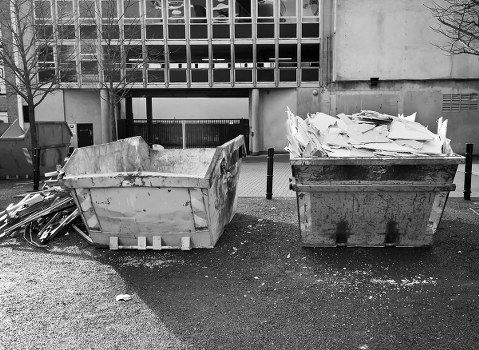 Environmental protection and sustainable disposal options are encouraged. Wherever possible, furniture should be repaired, reused, or directed to donation and recycling pathways. Furniture recycling reduces landfill waste and often involves pre-sorting to separate timber, metal, and upholstery. Clear labeling and segregation practices make furniture waste management more efficient and safer for handlers at subsequent stages.
![A row of three large wheeled rubbish bins positioned on a concrete surface outdoors, with the yellow bin on the left, the blue bin in the middle, and the green bin on the right. Each bin is made of durable plastic with a textured surface, featuring a large lid with a handle and a hinge mechanism; the yellow bin has a yellow body with black accents, the blue bin is entirely blue, and the green bin is entirely green. Behind the bins, there is a building with a corrugated metal wall, painted in light grey and dark grey sections, suggesting an industrial or commercial area in the vicinity of [TOWN] or the postcode area. The scene is well-lit with natural daylight, and the bins are arranged neatly in a straight line, indicating their use for waste collection and rubbish removal services from [COMPANY_NAME] in the local area.](/pub/_photos/rubbish/f1296820432.jpg) Monitoring, review, and continual improvement underpin this health and safety policy. Regular audits, worker feedback, and incident trend analysis guide updates to procedures and training. A culture that values safety, encourages reporting, and proactively manages risk results in safer furniture disposal processes and improved outcomes for staff, clients, and the environment. This policy will be reviewed periodically and updated to reflect changes in risk profile, equipment, or operational methods.
Monitoring, review, and continual improvement underpin this health and safety policy. Regular audits, worker feedback, and incident trend analysis guide updates to procedures and training. A culture that values safety, encourages reporting, and proactively manages risk results in safer furniture disposal processes and improved outcomes for staff, clients, and the environment. This policy will be reviewed periodically and updated to reflect changes in risk profile, equipment, or operational methods.